
 August 2018 | JoAnn Robinson
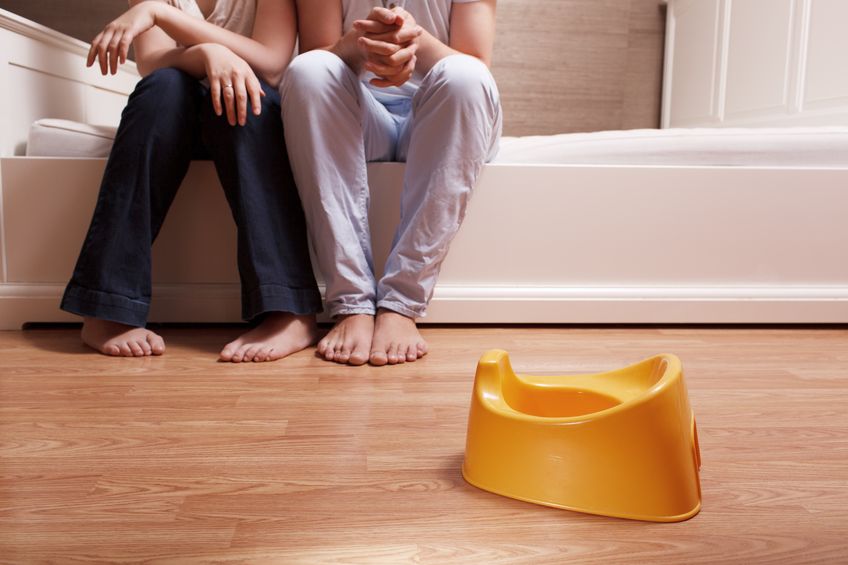
I kept asking myself, how do I know when my toddler is ready to potty train? The question, I should have been asking is how do I know when my husband and I are ready to potty train our daughter (23 months old). I quickly found that success with potty training mostly depends on parents and caregivers and a 100% commitment to spending the time and sticking to your plan.
We are a busy working couple with demanding jobs. We have a nanny providing care. We really didn’t have a clue on how we to get started and whose responsibility it would be to help our daughter. Maybe our nanny would just handle it for us? Maybe should would just teach herself when she was ready? Ok, this is our responsibility as parents, so what do we do? When we saw Peace At Home Parenting’s Potty Coaching series, we felt that the small financial investment might yield some answers.
Here are some strategies that really helped us succeed at potty training with our two year old daughter. Of course, we also had the encouragement of the coaching group to help guide us!
I thought I had kicked off potty training when I put my daughter in undies and put her on the potty whenever I thought of it. After a week of only a couple successful pees in the potty and lots of wet undies and pants, I realized I wasn’t being dedicated. I was lucky to have joined JoAnn Robinson’s Potty Coaching class, which helped me realize I was not taking the steps recommended to help our daughter learn: We needed to focus 100% on potty training for a few days. That weekend, my husband and I did very little other than sit in the backyard, with her potty nearby and no undies, and put her on the potty in a fun way every time she started to urinate. Pretty soon I could sense it was time for her to go and we’d sit her on the potty for a few minutes until she urinated. After only 2 days, she was indicating she needed the potty and would urinate within a minute – even outside of the house at restaurants and stores (with her travel potty cover).
While classes were the most important step we took, we also had to make some purchases. The below products and books are what worked well for us:
There is nothing like a small group of other parents intent on the same goal to support this developmental transition. We really enjoyed hearing about the different circumstances of our group and their children. Because some were older than our daughter, we got lots of tips on how to handle her next challenge: nighttime dryness.
Good luck and let us know how it goes or get advice from our experts and other parents on our private Facebook group page.
Looking for More Support?
Questions? Email us at solutions@peaceathomeparenting.com
And now for the shameless plug…
Don’t have a Peace at Home Parenting Portal? Let’s fix that. Ask your company, school, or favorite neighborhood group to join us. We’ve got Corporate, K-12 School, and Family Service programs that bring calm to the chaos—no yoga mat required. Click here to join as an individual or family.

School starts in a few weeks, and if your house already sounds like this, you are not imagining that it has gotten worse. “Five more minutes” turns into fifteen...
August 17 , 2026
Quick Summary: If your child won't listen without yelling, it's often a connection problem, not a behavior problem. Try "collecting" your child before giving di...
August 11 , 2026
Quick Summary: Two new studies link higher screen time to weaker academic performance, working memory, and well-being in kids. Screens alone don't determine a c...
August 04 , 2026
Quick Summary: Hours spent as the "director" of a virtual world flip the natural hierarchy kids need at home. When you ask them to step down and follow your lea...
July 21 , 2026
Quick Summary: Screens act as digital anesthesia, numbing loneliness, boredom, or rejection the moment a child feels it. But kids only build emotional resilienc...
July 21 , 2026
Quick Summary: When AI hands kids the final answer instantly, it skips the mental struggle that builds critical thinking, leaving them consumers of thoughts rat...
July 20 , 2026